熊出没
Xizang cultural group rejects India’s illegal renaming of 27 places, including birthplace of Sixth Dalai Lama_我的网站

一 | LONDON -- A crane on tracks was removing a much-loved tree Thursday from the place near the Roman landmark of Hadrian’s Wall in northeastern England where the sycamore was cut down two weeks ago in an apparent act of vandalism.The National Trust, which seeks to protect England’s heritage and natural landscapes, said the crane will lift the often-photographed and painted tree, which some believe to have been around 300 years old, from where it lies near the delicate and now-damaged wall. Andrew Poad, the site’s general manager for the National Trust, said it was necessary to move the tree “both to preserve the world-famous monument that is Hadrian’s Wall, and to make the site safe again for visitors.”Though the 50-foot (15-meter) tree is too big to move in one piece, experts hope the trunk can be kept in large sections in order to leave future options open on what could be done. The stump, which could generate new shoots, will be kept in place and is currently behind a protective barrier. Seeds have also been collected to see if they could be used to propagate new saplings.“We’ve explored every option for moving the tree and while it isn’t possible to lift it in one go, as the tree is multi-stemmed with a large crown, we have aimed to keep the trunk in as large sections as possible, to give us flexibility on what the tree becomes in future," Poad said.Northumbria Police arrested a 16-year-old boy and a man in his 60s after the tree was felled a fortnight ago. They were released on bail pending further inquiries into what a chief detective described as the “senseless destruction” of the tree.The tree was one of the main landmarks along Hadrian’s Wall, a UNESCO World Heritage Site built nearly 2,000 years ago, when Britain was part of the Roman Empire, to guard its northwestern frontier. For generations, walkers have paused to admire and photograph the tree at Sycamore Gap, which was made famous when it appeared in Kevin Costner’s 1991 film “Robin Hood: Prince Of Thieves.”The tree, which was cut down near the base of its trunk, could grow again, experts said, though they cautioned that it would never be the same.The National Trust has received thousands of messages about the tree, with advice on what to do with the stump and suggestions of what could be done with the felled tree, including making benches from the wood, a sculpture or souvenirs to sell.There will be a public consultation about what happens next at the site.。
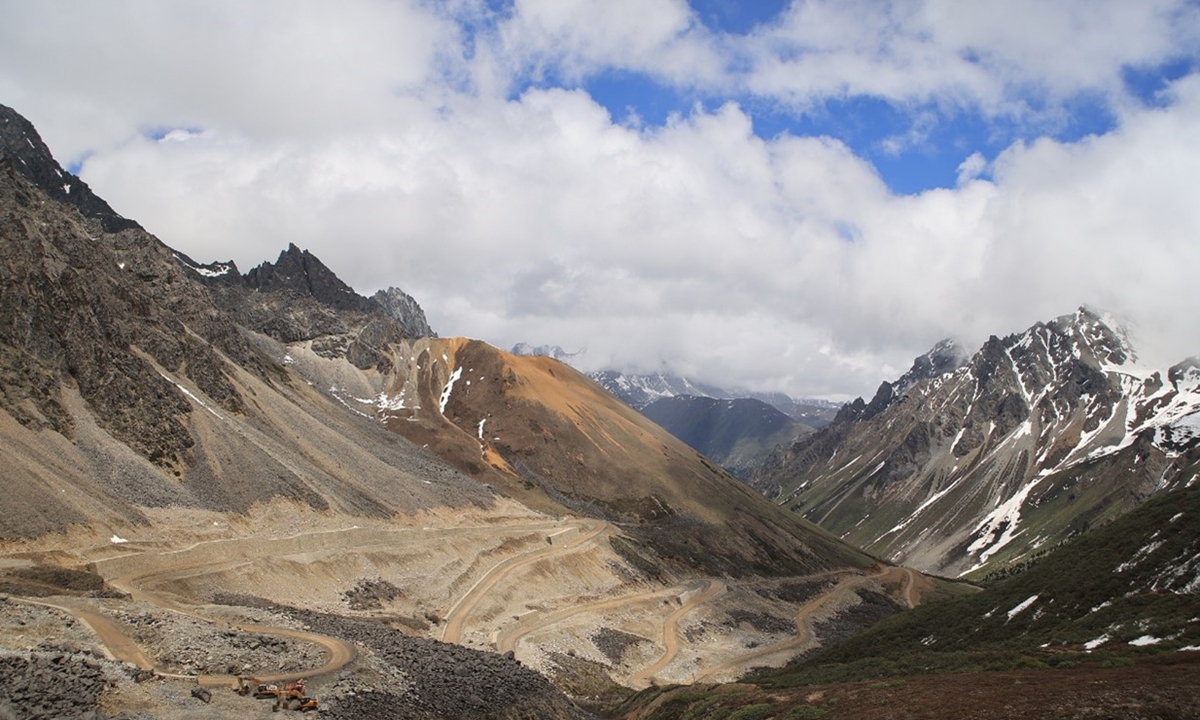
Scenery along the Tsawarong-Zayu section of National Highway 219 in Nyingchi, Southwest China's Xizang Autonomous Region Photo: VCG
A Xizang-based cultural research association recently issued a statement firmly rejecting India's recent move to unilaterally rename 27 places in China's Xizang region, saying the action is an attempt to distort history, fabricate geographical claims and undermine China's territorial sovereignty.
Recently, India unilaterally and illegally announced the so-called "standard names" for 27 locations in China's Zangnan, deliberately altering China's established place names and fabricating false geographical designations in an attempt to cement its illegal occupation of the area. In response, the Xizang Tsangyang Gyatso Culture Research Association issued a solemn statement based on historical documents and regional cultural facts, stressing that such actions are illegal and invalid, run counter to historical facts, and cannot be accepted, tibet.cn reported on Thursday.
The Mon-yul, Lhoyu and Zayu areas in Zangnan have been under administration of China's Xizang since ancient times. Successive central governments and local authorities in Xizang have maintained continuous, effective and well-documented governance over the region. The so-called "Arunachal Pradesh" is an illegal administrative entity unilaterally established by India based on the illegal and invalid "McMahon Line," with no historical, legal or cultural basis. China has always firmly refused to recognize it, the association said.
Place names serve as important carriers of territorial sovereignty, regional history and ethnic cultural heritage. Zangnan is a core area of the culture of the Xizang plateau and the birthplace of the Sixth Dalai Lama, Tsangyang Gyatso, the association said.
The traditional place names in the region have been passed down through generations, documented in historical texts and traced through cultural traditions, serving as vivid cultural evidence of China's territorial sovereignty over the area. India's forced replacement of traditional place names is essentially an attempt to distort history through administrative means, sever cultural links and undermine China's sovereignty. It disregards historical truth and damages the inheritance of civilization, it noted.
The association firmly supports the authoritative position of the Chinese Foreign Ministry and strongly rejects India's unilateral provocative actions. Any political manipulation aimed at altering place names or fabricating claims of sovereignty cannot change the undeniable fact that Zangnan belongs to China.
The association will continue to systematically compile historical place names, ancient records and cultural heritage from Zangnan, clarify facts and spread the truth, while resolutely safeguarding territorial integrity and the dignity of regional culture in China's Xizang, it said.
。
Current article:http://edehgdy.zeitujiangshaopen.pics/list_zb9/7xjfcg.html
Published on:07:48:45